Still Competing With Who You Were? Here's Why That Battle Is Wrecking Your Peace
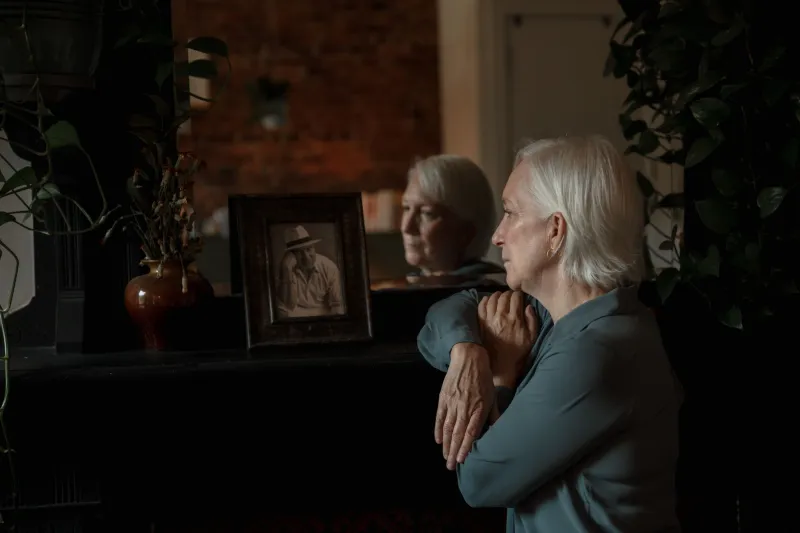
The Ghost in Your Camera Roll
Somewhere on your phone right now, there's probably a photo. Maybe it's from a vacation, a milestone birthday, or just a random Tuesday when everything somehow felt right. You look at it occasionally — sometimes for a hit of nostalgia, sometimes as a quiet reminder of who you used to be.
And here's the thing nobody talks about: that habit might be quietly wrecking your mental health.
We live in an era obsessed with the comparison trap — comparing ourselves to celebrities, influencers, neighbors, coworkers. But there's a subtler, sneakier version of this that gets way less airtime. It's the comparison you run against your own past self. The you who was thinner, more energetic, more ambitious, or just... less complicated. And unlike comparing yourself to a stranger online, this one hits different because it feels earned. That was actually you. You've lived it. You have receipts.
But holding onto old versions of yourself isn't nostalgia. It's an anchor.
Why Your Brain Loves Old Identities (Even When They Don't Fit)
Neuroscience has a lot to say about identity attachment, and most of it explains why this is so hard to shake. The brain is a prediction machine. It builds models of the world — including a model of you — and it really, really doesn't like updating those models without a fight.
Researchers studying the concept of the "narrative self" have found that people construct a continuous story about who they are, pulling from memories, habits, and self-referential thinking. The problem? That story tends to lag behind reality. You might have changed careers, ended relationships, moved across the country, and completely overhauled your values — but your internal narrative can still be running an outdated script.
This is sometimes called "identity foreclosure" — essentially, locking yourself into a self-concept that no longer reflects who you actually are. And when your current life doesn't match that old identity, your brain registers it as a kind of loss. A threat, even.
So you grieve the old you. You chase her. You measure everything against her. And the present version of yourself — the one actually living your life right now — never quite measures up.
The Sneaky Ways We Stay Stuck in Old Chapters
This doesn't always look like obvious nostalgia. Sometimes it's subtle. Here are a few ways identity attachment sneaks into everyday life:
Saved screenshots and old photos as benchmarks. Keeping a folder of "before" pictures or screenshots of your old apartment, old body, old life — and using them to measure whether you've "gone forward" or "slipped back."
Rereading old journals with a sense of longing. Journals are great tools for reflection, but if you're reading old entries and thinking I used to have so much more figured out, that's your brain romanticizing a past version that probably wasn't as polished as it looks in hindsight.
Describing yourself in past tense. "I used to be really disciplined." "I was the person who always had a plan." When you narrate your identity through what you were, you're essentially telling yourself that who you are now is a lesser sequel.
Chasing feelings instead of meaning. Trying to recreate the exact emotional experience of a past chapter — the buzz of your first job, the freedom of your twenties, the simplicity of life before everything got complicated — rather than finding what genuinely fulfills you now.
Letting Go Isn't the Same as Erasing
Here's where a lot of people get stuck: they think releasing an old identity means pretending it didn't happen. Like you're supposed to delete the photos, burn the journals, and act like the past never existed.
That's not it at all.
Your history is part of you. The goal isn't to amputate it — it's to stop governing yourself by it. There's a meaningful difference between honoring where you've been and being trapped there.
Think of it like this: a healthy relationship with your past self looks a lot like a healthy relationship with an ex. You can acknowledge the good years. You can appreciate what you learned. But you're not calling them at 2 a.m. hoping to feel that way again, and you're definitely not letting them vote on your current decisions.
Practical Ways to Loosen the Grip
So how do you actually do this? How do you stop measuring your current self against a highlight reel from five years ago?
Audit what you're consuming. Go through your camera roll, your saved posts, your journal archives. Ask yourself honestly: does looking at this make me feel inspired and grounded, or does it make me feel like I'm falling short? You don't have to delete everything, but be intentional. Curate your inputs.
Write a letter to your past self — and then close the chapter. Not the kind where you give advice to your younger self, but the kind where you genuinely say goodbye to a version of you that served its purpose. Acknowledge what that chapter gave you. Then close the book. This sounds cheesy, but it works — externalizing the narrative helps your brain process the transition.
Reframe the timeline. Instead of thinking of your life as a graph where you're either up or down from some peak moment, try thinking of it as a series of completely separate seasons. Each one has its own climate, its own beauty, its own challenges. A winter isn't a failure of summer. It's just a different season.
Get curious about who you are right now. This is the part people skip. They spend so much energy mourning old identities that they never actually explore the new one. What do you care about now that you didn't before? What do you find interesting, annoying, comforting, exciting? Who are you today — not as a comparison point, but as a complete, standalone person?
Talk to someone. A therapist, a coach, even a trusted friend — having someone reflect your current self back to you can be genuinely destabilizing in the best possible way. Sometimes we need an outside perspective to see how much we've actually evolved.
The Fresh Start Isn't Behind You
There's something almost culturally baked-in, especially in the U.S., about peak moments — the idea that your best years are either ahead of you or (worse) already behind you. We're obsessed with origin stories and comeback arcs. But most of life doesn't work like that. Most of life is just... ongoing. Layered. Evolving.
The version of you from three years ago wasn't the finished product. Neither is the version reading this right now. That's not a problem to solve — that's actually the whole point.
Your past self did the best she could with what she had. She got you here. That's worth honoring. But she doesn't get to run the show anymore.
The most genuinely carefree thing you can do for your mental health right now? Stop competing with a ghost. The person you're becoming doesn't need to beat anyone — including the person you used to be.